Formatting and analysis
Prettier, ESLint and strict TypeScript passed.
02 / Business Websites
Concept Project
A logistics business website concept that turns a complex service offer into a clear journey from discovery to a structured first brief.
Current record state
Authentic concept case study / verified interface evidenceProduction-rendered interfaces and documented technical checks support the implemented journey. No operating logistics or commercial outcomes are claimed.
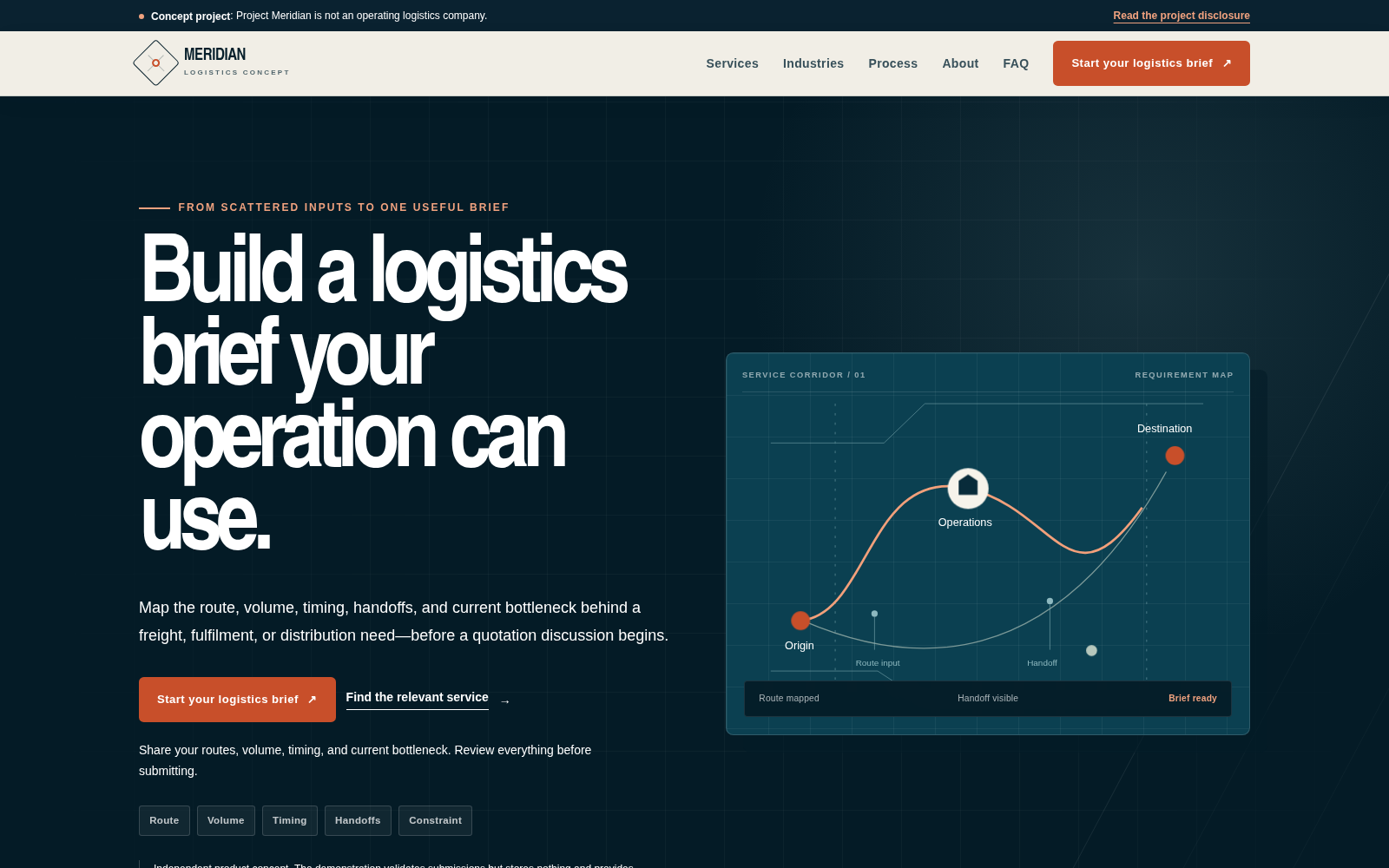
01 / Business context
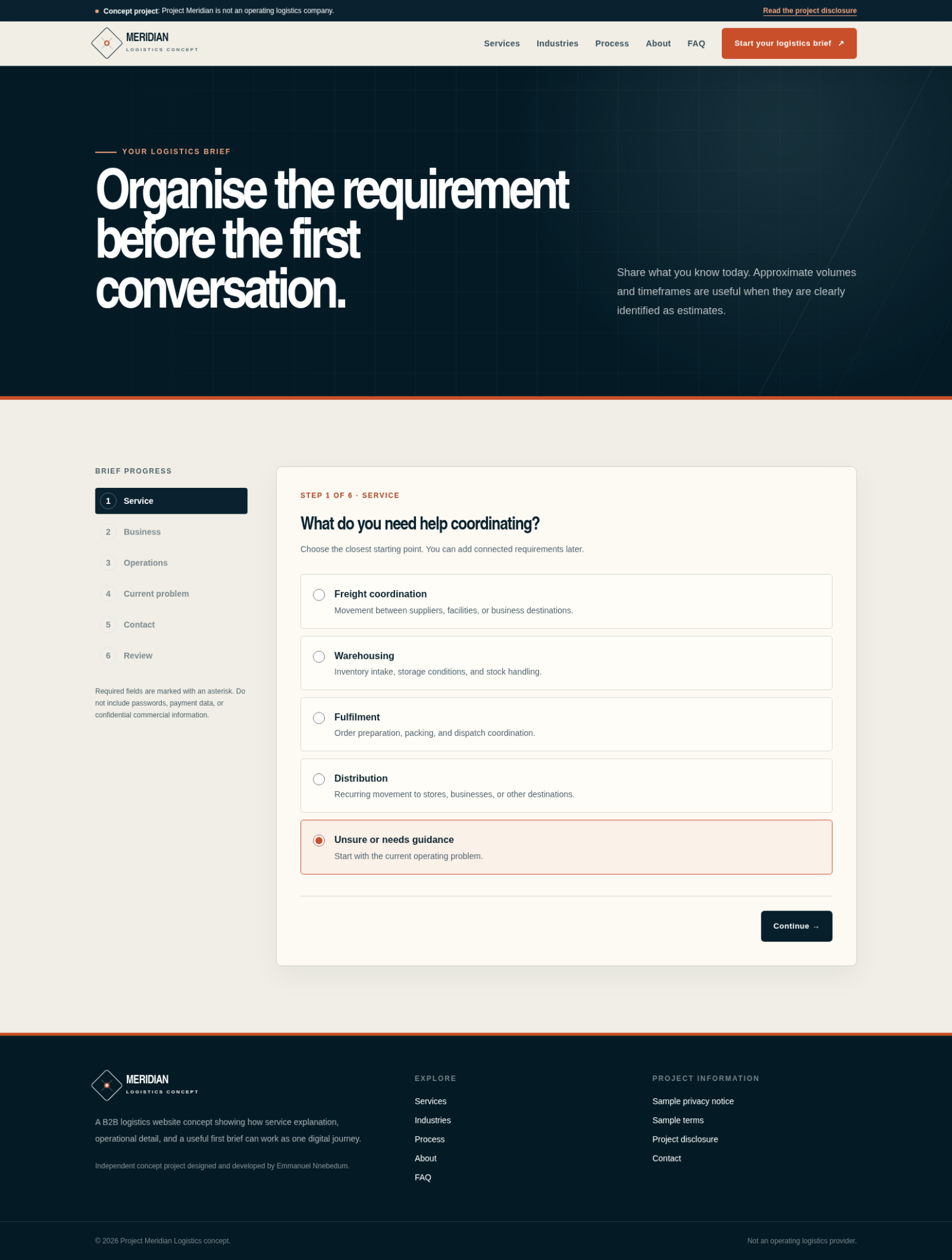
Meridian explores how a B2B logistics website could move from service discovery to a structured first brief without pretending to quote, track or operate a real shipment.
The concept is written for decision-makers assessing freight coordination, warehousing and fulfilment, or distribution support. They need to describe an operating requirement—not browse consumer parcel products.
The project objective is to reduce ambiguity before a first commercial conversation. That intended benefit has not been measured, and Meridian has no customers, shipments, locations, traffic, enquiries or commercial results.
What does the service cover?
Which operating situations might fit?
What information is needed?
What happens after the brief?
What remains illustrative?
What will the concept do with submitted data?
02 / Website system
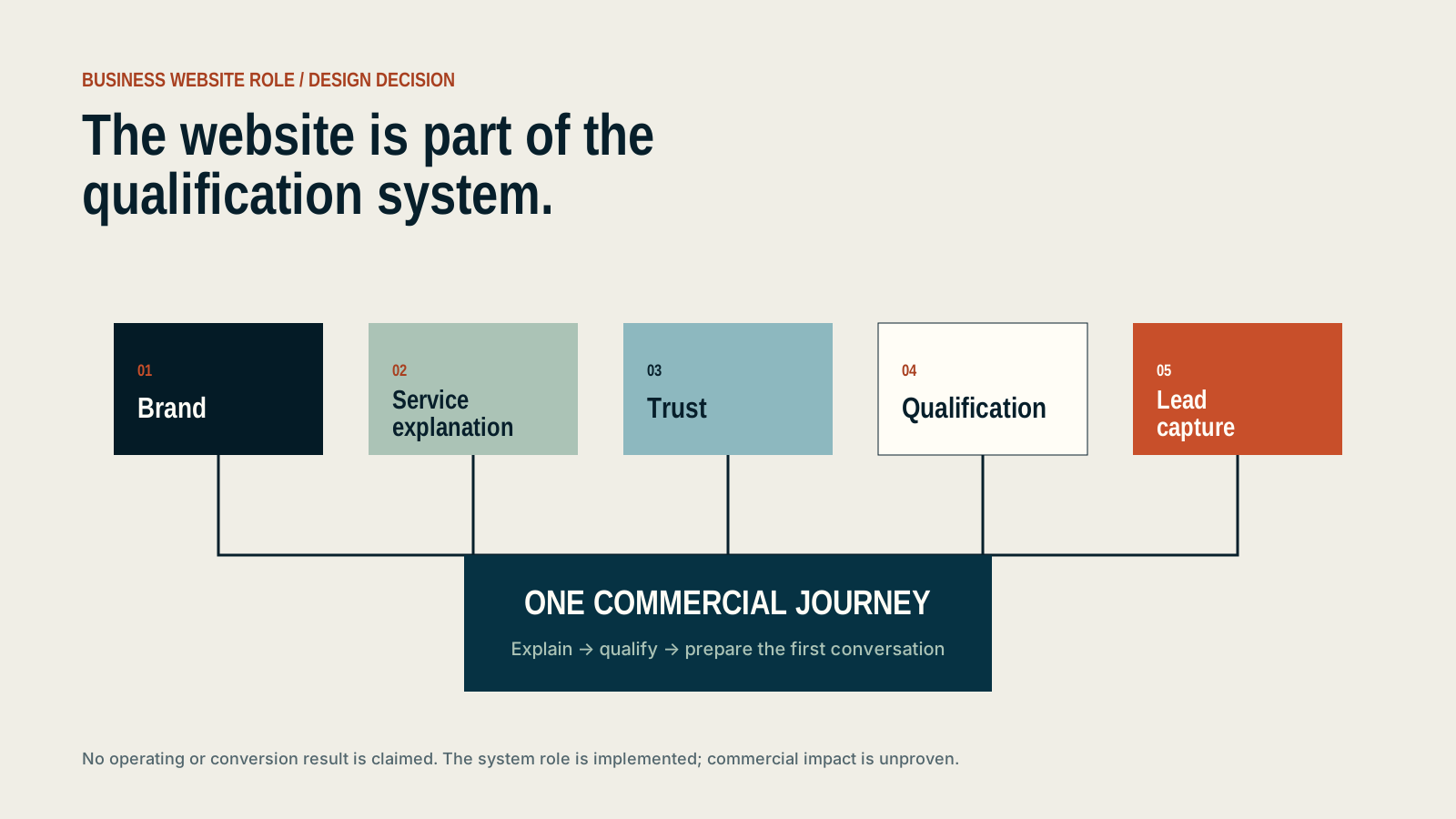
The navigation progresses from discovery to evaluation and action. Trust comes from clear service language, a visible process, explicit boundaries and a coherent interface—not fabricated scale, logos or testimonials.
03 / Qualified brief
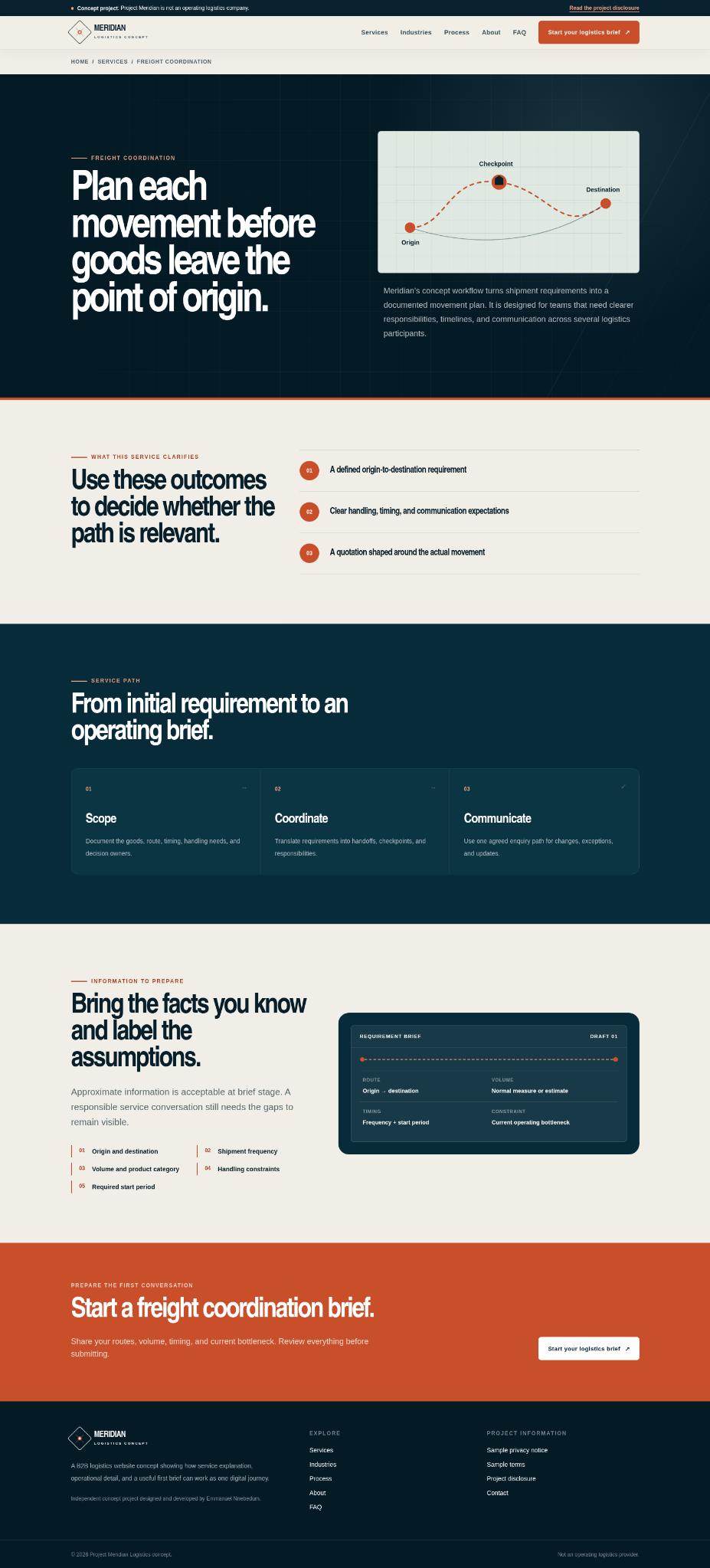
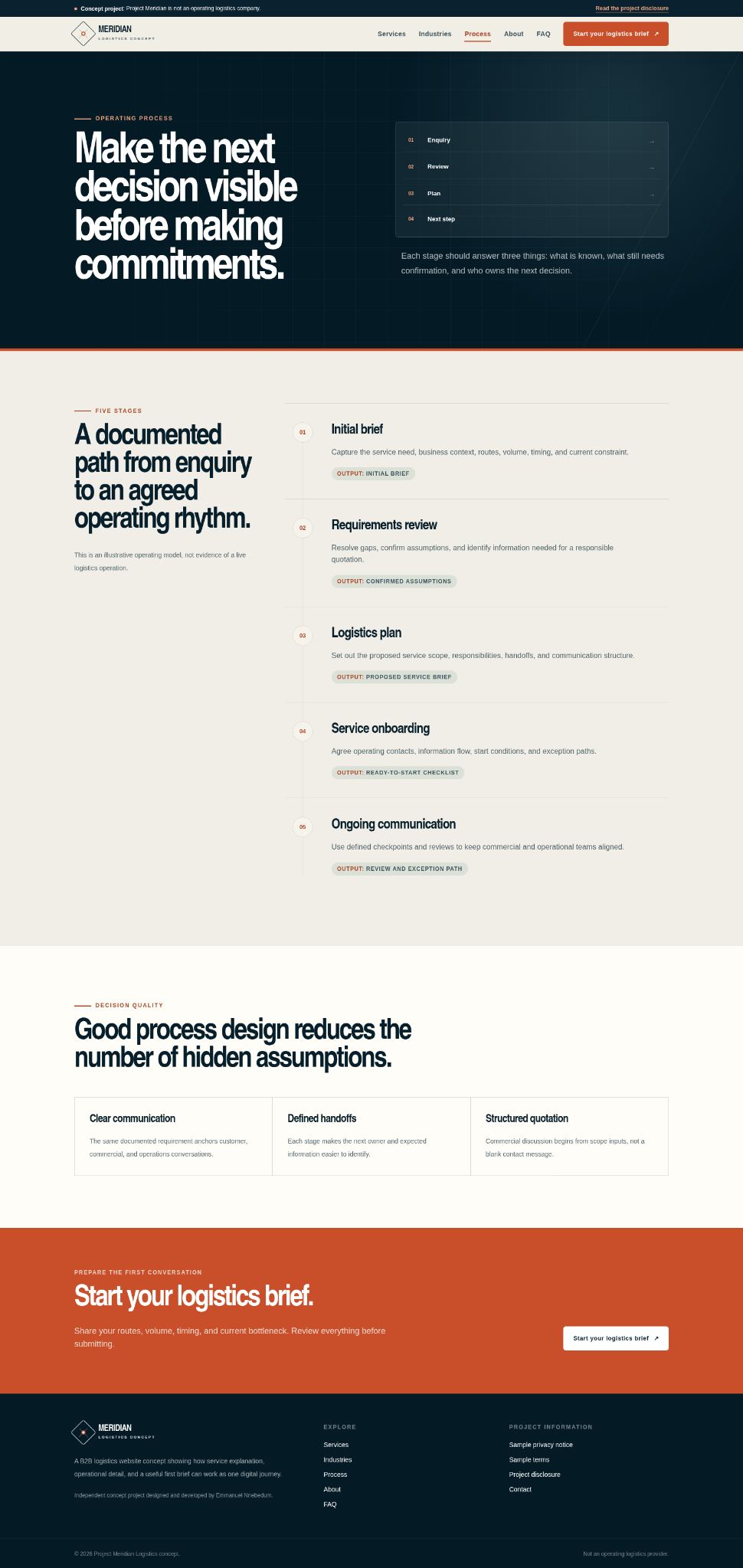
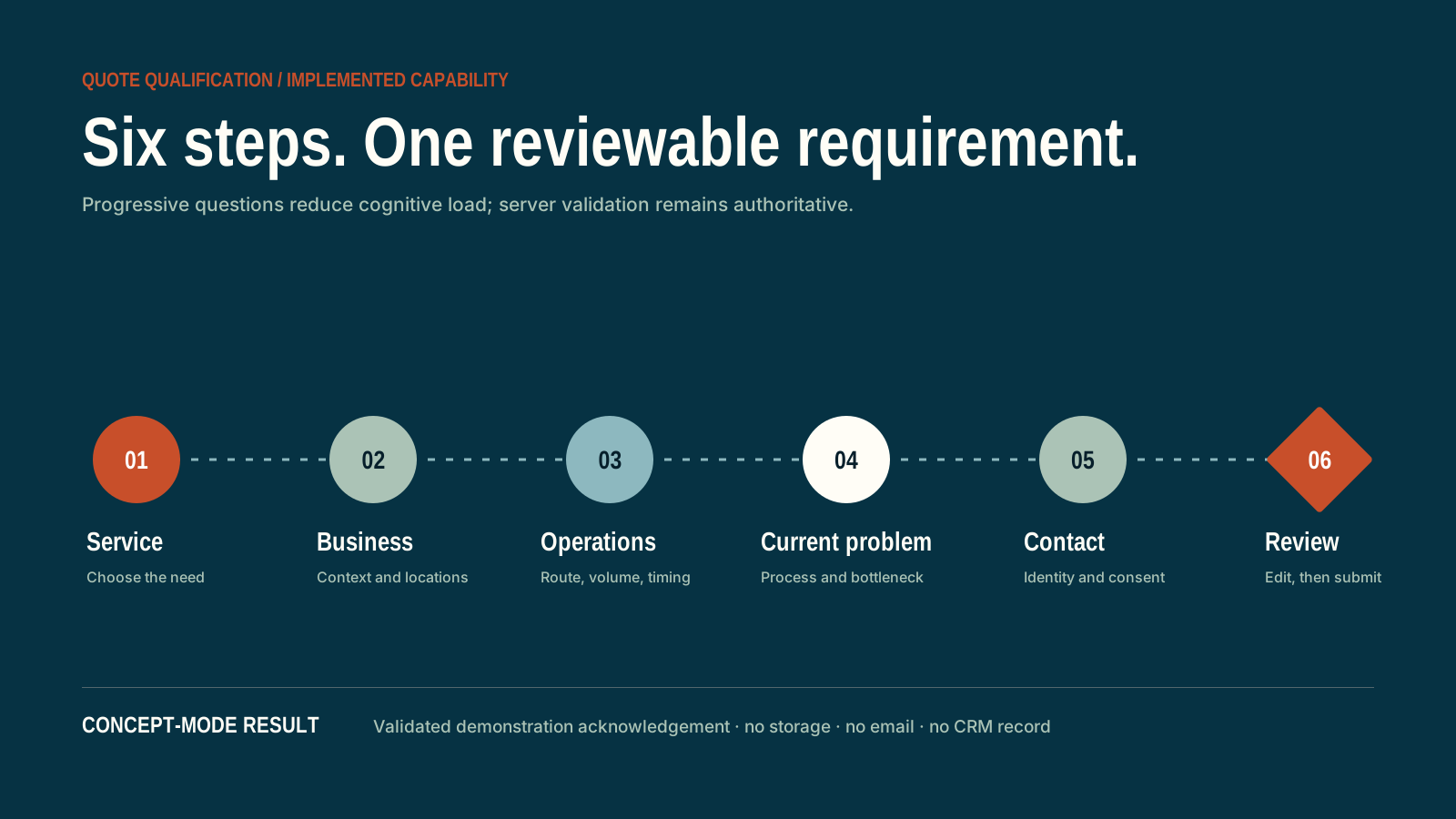
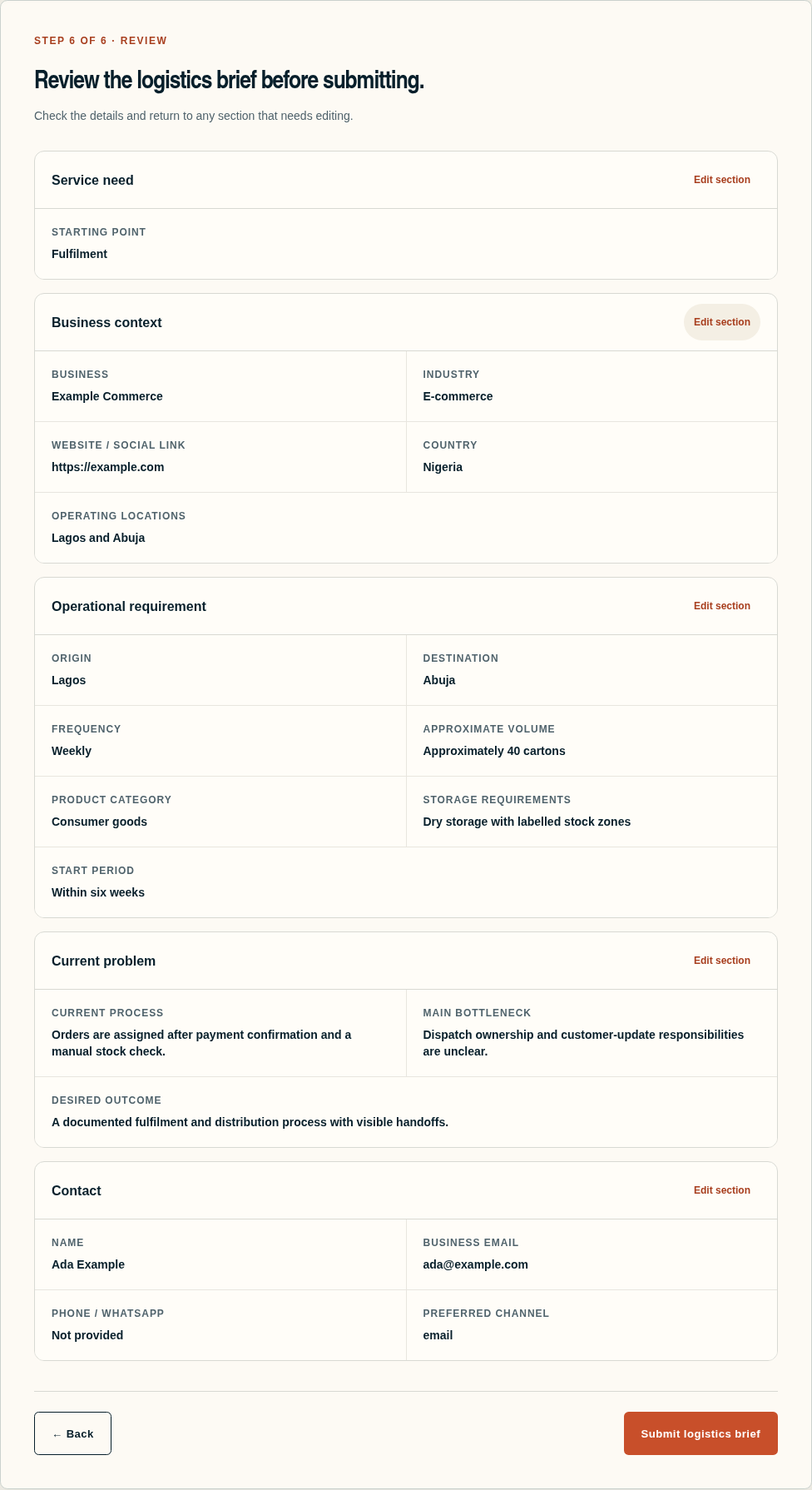
The implemented six-step brief collects service choice, business context, operating requirements, the current problem, desired outcome, contact details and consent before a grouped review.
04 / Evidence and decisions
The supplied evidence supports an implemented interface and local verification record. It does not support production operations, field performance or commercial outcomes.
Prettier, ESLint and strict TypeScript passed.
45 tests passed across 13 files.
13 Playwright checks passed; one capture-only check was skipped by default.
The reviewed build generated 24 routes.
Earlier local, unthrottled observations recorded mobile LCP at 584 ms with CLS 0 and desktop LCP at 700 ms with CLS 0. These are laboratory observations—not field Core Web Vitals, a production service level or evidence of conversion improvement.
The reviewed dependency graph retained one documented moderate Next.js-to-PostCSS advisory path. It was accepted after reachability analysis; the source package does not describe the graph as audit-clean.

The six-step sequence keeps the first choice small, then collects the operating detail needed for a more useful later conversation.
Trade-off: The journey asks for more attention than a short contact form. Its value is a product hypothesis, not a measured conversion result.
Routes, nodes, handoffs and planning grids explain coordination without stock freight photography, fake maps or invented scale.
Trade-off: Code-native graphics stay lightweight and editable, but deliberately avoid photographic realism.
A valid brief is acknowledged honestly while persistence, email and CRM remain off. The concept cannot imply operational follow-up.
Trade-off: A provider-independent MongoDB adapter is prepared but has not received a credentialed staging integration test.
What this project demonstrates
Translating a commercial problem into information architecture, a conversion journey, responsive interfaces, a validated full-stack form flow, security-conscious boundaries, accessibility behaviour, search planning, automated tests and implementation documentation.
Related service
This record is transparent about its current evidence. Your project can begin with the problem you are trying to solve.